
The Best Age to Start Chess Coaching for Kids: A Parent's Practical Guide
Oct 12, 2026 • By White Knight Chess Academy
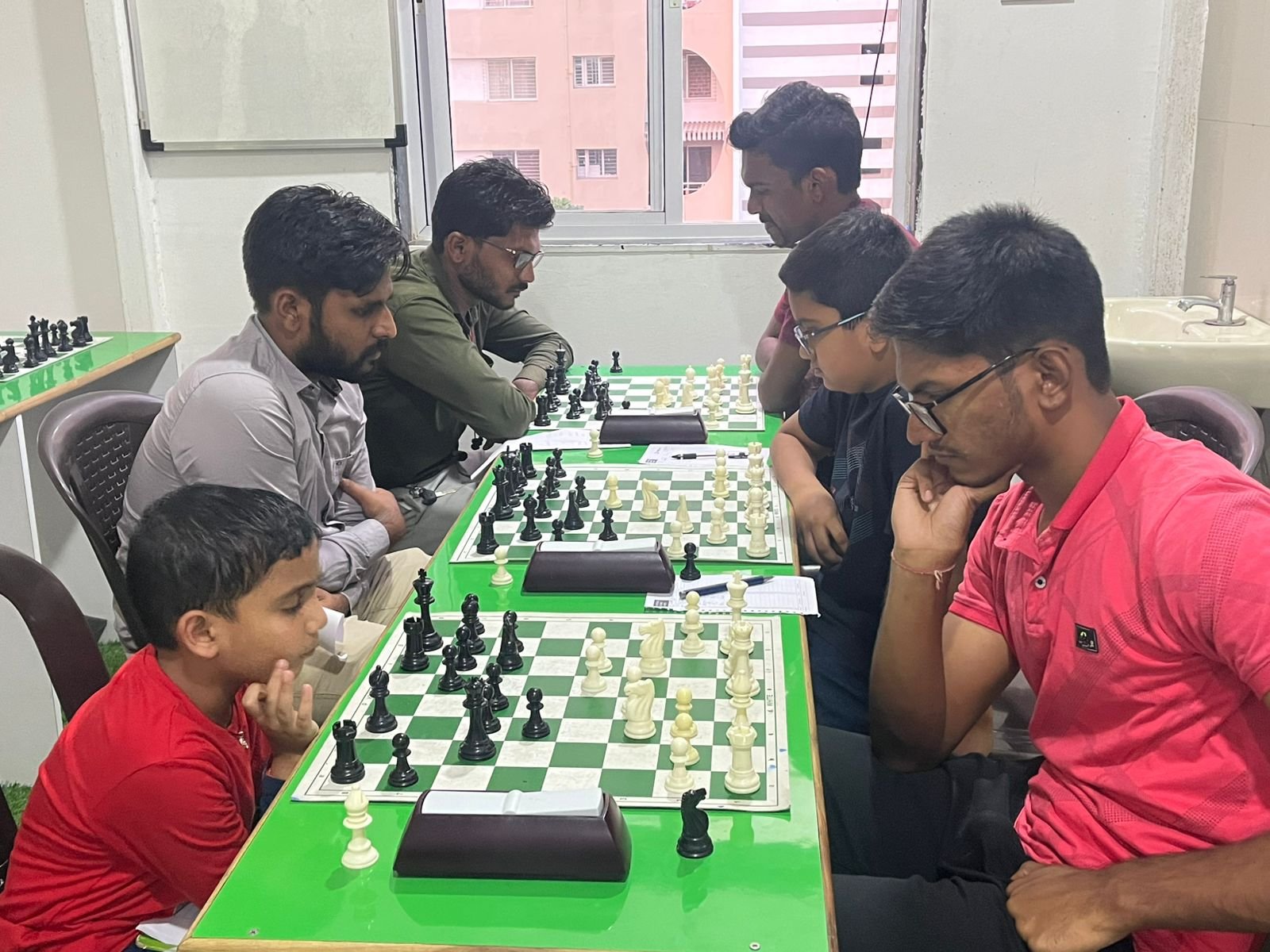
# The Best Age to Start Chess Coaching for Kids: A Parent's Practical Guide
As parents living in bustling Pune neighborhoods like Hadapsar, Magarpatta, Amanora, Kharadi, and Keshav Nagar, you want the absolute best for your child’s development. With screens dominating modern childhoods, finding an activity that builds genuine focus, critical thinking, and patience is a top priority.
Inevitably, many parents walk into our academy asking a pivotal question: *"What is the best age to learn chess for kids?"*
Is it toddlers barely out of preschool, or should you wait until middle school when logic sets in? As the senior coaching team at White Knight Chess Academy (WKCA) in Hadapsar, Pune, we have trained over 1,500 students. We have seen prodigies start at age four and state champions emerge from late starters at age twelve.
However, science, pedagogy, and years of coaching experience point to a specific "golden window." In this practical guide, we break down developmental milestones, readiness signs, and how our specialized curriculum at wkca64.com turns young beginners into confident thinkers.
---
1. The Golden Window: Why Ages 5–7 is the Sweet Spot
While children can technically learn the basic moves of chess as early as age four, ages 5 to 7 represent the absolute golden window for structured chess coaching.
During these formative years, a child’s brain undergoes explosive neuroplasticity. Executive functions—such as working memory, cognitive flexibility, and inhibitory control—are developing rapidly. Chess is essentially an interactive gym for these exact cognitive skills.
At White Knight Chess Academy, our classes for chess for 5 year olds are specifically designed to harness this natural curiosity. Children in this age bracket are no longer just reacting to impulses; they are beginning to understand cause and effect. When a 6-year-old moves a knight and realizes it attacks two pieces simultaneously, a lightbulb goes off. That "aha!" moment wires neural pathways for spatial reasoning and logical deduction that benefit them far beyond the chessboard—translating directly into math and reading performance at school.
---
2. Readiness Signs: When Should Kids Start Chess?
Chronological age is just a number. Every child develops at their own unique pace. Instead of focusing solely on your child’s birthdate, look for these practical behavioral readiness signs:
- Attention Span: Can your child sit and focus on a game, puzzle, or storybook for 15 to 20 minutes without getting completely distracted? Chess requires patience, and a rudimentary attention span is necessary to grasp turn-taking.
- Curiosity About Rules: Does your child enjoy board games, puzzles, or matching games? Do they ask questions about how things work or show an interest in structured rules?
- Handling Wins and Losses: While competitive drive takes years to mature, a ready child can generally handle a simple loss in a game of Snakes and Ladders or Ludo without a major emotional meltdown.
- Basic Recognition: Can they count up to 10 and recognize basic shapes or spatial grids? (Chess boards are an 8x8 grid of coordinates, so basic spatial awareness helps).
If your child checks most of these boxes, they are primed and ready for professional guidance.
---
3. The Beginner Approach: Fun-First, Theory-Second
One of the biggest mistakes well-meaning parents make is treating chess like advanced rocket science right out of the gate. For young children, dry lectures on opening theory or algebraic notation are a surefire way to kill their enthusiasm.
At WKCA, our philosophy is anchored in a fun-first, theory-second methodology. We believe that if a child isn't smiling, they aren't truly learning.
- Storytelling and Personification: We don't just teach pieces; we bring them to life. The Rook moves in straight lines like a massive castle guard. The Knight leaps over obstacles like a majestic horse. The Queen is the most powerful guardian of the kingdom.
- Mini-Games over Full Matches: Asking a 6-year-old to play a 40-move standard chess game is exhausting. Instead, we use mini-games—such as "Pawn Wars" (racing pawns across the board) or "Capture the Castle"—to teach tactics in 5-minute bursts.
- Positive Reinforcement: Every tactical mistake is framed as a puzzle to be solved, fostering a healthy growth mindset rather than a fear of failure.
---
4. Inside the White Knight Beginner Curriculum
Founded with a vision to build analytical thinkers and future champions, White Knight Chess Academy has grown to become a premier institution in Pune. As 6-time Pune District Champions, our pedigree speaks for itself, but our true pride lies in our structured, age-appropriate curriculum.
Led by FIDE-rated experts like Coach Ashirwad Tupe and Coach Prashant Somvanshi, our beginner program is meticulously engineered for young learners:
- Level 1: The Kingdom Explorer (Ages 5-7): Focuses on board orientation, piece movements, capturing, checkmate patterns with King and Rook/Queen, and basic sportsmanship.
- Level 2: Tactical Tacticians (Ages 8+ or graduates of Level 1): Introduces fundamental tactics like forks, pins, skewers, discovered attacks, and basic opening principles (controlling the center, developing minor pieces early).
- Interactive Puzzles & Sparring: Students solve daily tactical puzzles tailored to their rating level and participate in friendly weekend tournaments to apply what they’ve learned in a low-pressure environment.
Whether you reside right here in Hadapsar, commute from Magarpatta City or Amanora Park Town, or travel from Kharadi and Keshav Nagar, our academy provides a welcoming, air-conditioned, distraction-free sanctuary dedicated purely to chess excellence.
---
Frequently Asked Questions (FAQs)
1. Is 4 years old too young to start chess classes?
Four can be a bit early for formal, long-form chess classes unless the child displays an exceptional, rare focus. However, introducing the pieces through play and storytelling at home is a wonderful precursor. We generally recommend evaluating readiness around age 5 for structured coaching.
2. My child is 10 and has never played chess. Is it too late to start?
Not at all! While ages 5-7 are the golden window for early cognitive absorption, older children (ages 9–14) possess superior abstract reasoning and concentration. Older beginners often progress rapidly through the fundamentals because they can digest strategic concepts much faster.
3. How do chess classes help with academics?
Chess is a proven cognitive enhancer. It improves working memory, concentration, pattern recognition, and critical thinking. Studies consistently show that children who play chess regularly exhibit noticeable improvements in math scores, reading comprehension, and problem-solving capabilities at school.
4. Where is White Knight Chess Academy located, and how do we join?
WKCA is centrally located in Hadapsar, Pune, easily accessible for families from Magarpatta, Amanora, Kharadi, and Keshav Nagar. We offer flexible batch timings for weekdays and weekends. You can easily book an interactive trial class by visiting our official website at [wkca64.com](https://wkca64.com).
---
Take the First Step Today
Choosing the right activity for your child is a big decision. Chess is more than just a game—it is an investment in your child's patience, discipline, and intellectual resilience that will pay dividends for a lifetime.
Join the 1,500+ students who have trusted Pune's finest mentors to guide their chess journey.
Ready to see your child build unmatched focus and strategic brilliance?
Visit [wkca64.com](https://wkca64.com) today to book your child's trial chess class at White Knight Chess Academy in Hadapsar, Pune!
Book a Free Trial Chess Class
Want structured, FIDE-rated coaching for your child in Hadapsar, Pune or online? Join a free trial session at White Knight Chess Academy.
Book Free Trial Class