
How Chess Helps Children with ADHD, Restlessness, and Screen Addiction
Nov 3, 2026 • By White Knight Chess Academy
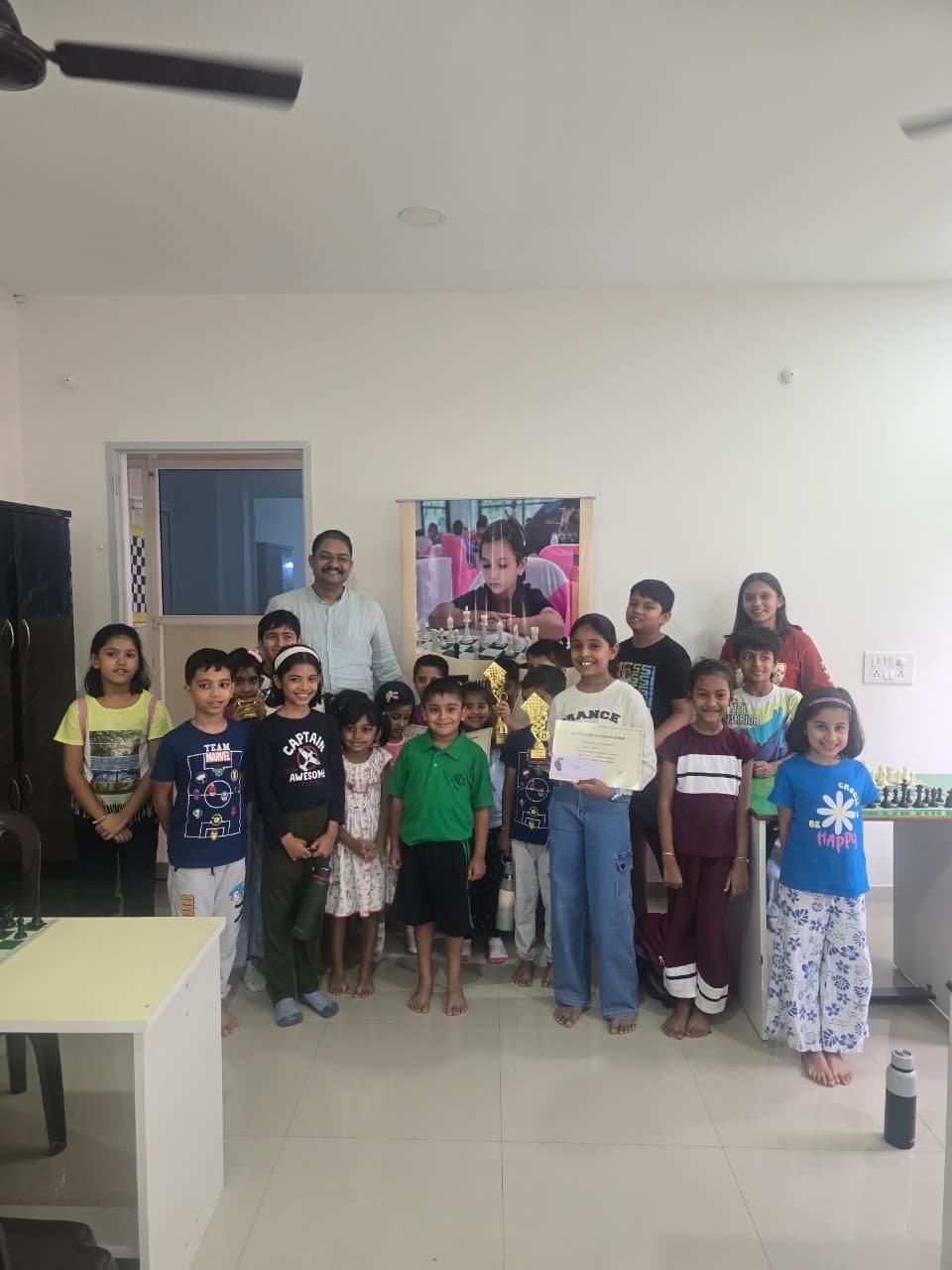
Welcome to White Knight Chess Academy (WKCA), located right here in the heart of Hadapsar, Pune. As senior coaches who have mentored over 1,500+ students across the neighborhood—from Magarpatta and Amanora to Kharadi and Keshav Nagar—we hear the same parental concern almost every single day.
Moms and dads often tell us, *"My child can't sit still for five minutes, but they will stare at a tablet for three hours straight."* In our fast-paced digital age, restlessness, short attention spans, and screen dependency have become massive hurdles for families.
Fortunately, there is a powerful, timeless remedy hiding in plain sight: the 64 squares of a chessboard. As a 6-time Pune District Champion academy with FIDE-rated coaches, we have witnessed firsthand how the royal game works wonders. Let us explore why chess for ADHD kids is one of the most effective non-pharmacological tools you can invest in today.
The Modern Battleground: Dopamine, Screens, and Restless Minds
To understand why children struggle with attention today, we must look at how modern technology hacks the developing brain. Short-form video reels, mobile games, and bright flashing animations deliver instant dopamine hits with zero effort required.
When a child is used to changing content every three seconds, sitting in a quiet classroom feels agonizingly slow. This constant craving for stimulation often manifests as hyperactivity, impulsive decision-making, and intense frustration when limits are placed on screen time.
Parents constantly ask us how to reduce screen time with chess without causing massive household meltdowns. The secret lies in understanding how chess captures a child's imagination and retrains their brain to tolerate silence, patience, and deliberate thought.
How Chess Transforms ADHD and Hyperactive Energy
Many people assume chess is a quiet, rigid game that is impossible for a high-energy child to play. In reality, children with ADHD often possess incredible creativity, fast processing speeds, and sharp intuition—traits that make brilliant tactical chess players once they learn to harness them.
Channeling Hyperactivity into Active Calculation
Instead of suppressing a child's restless energy, chess gives that energy a physical and mental battlefield. Moving pieces, capturing opponents, and calculating tactical threats require physical engagement combined with intense mental focus.
When a child sits across the board, their hyperactive impulses are temporarily channeled into a singular objective: protecting the king and trapping the opponent. Physical restlessness is slowly transformed into active, engaged calculation.
Building Sustained Attention Development
Unlike video games that do the thinking for the child, the chessboard demands total accountability. A child quickly learns that if they do not pay attention to what their opponent is planning, they will lose their queen.
Through structured chess focus training Pune programs, kids learn to extend their attention spans naturally. What starts as a 5-minute attention span slowly stretches to 15, 30, and eventually 60 minutes of deep, uninterrupted concentration.
The Antidote to Instant Gratification: Impulse Control
One of the greatest challenges for children with ADHD is mastering impulse control in children. The default mode is often *act first, think later*—both on the playground and in academics.
Chess is the ultimate teacher of delayed gratification. Every move on the board triggers a simple psychological question: *"If I go here, what will my opponent do next?"*
- The Pause Button: Chess forces a child to physically touch their chin, pause, and scan the board before touching a piece.
- Consequence Analysis: Children experience immediate, logical consequences for impulsive moves—such as losing a piece because they rushed.
- Emotional Regulation: Learning to lose a game gracefully teaches emotional resilience and helps children manage frustration effectively.
These lessons do not stay on the board. Parents at WKCA frequently report that their children start pausing before speaking, thinking through homework assignments more carefully, and reacting with less frustration to everyday rules at home.
The WKCA Approach: Tailored Pacing for Every Child
At White Knight Chess Academy, we do not believe in a one-size-fits-all teaching method. Teaching a child with ADHD or high energy requires patience, empathy, and specialized pedagogical pacing.
Our FIDE-rated coaches understand that every child processes information differently. We break down complex strategies into bite-sized, interactive puzzles that keep restless minds thoroughly engaged.
- Active Learning: We combine physical board play with storytelling, tactical games, and friendly tournament simulations.
- Positive Reinforcement: We celebrate small victories, keeping motivation high and anxiety low.
- Gradual Pacing: We allow high-energy kids the physical freedom to breathe and reset between intense calculation sessions.
As a 6-time Pune District Champion training facility, we have successfully guided hundreds of children who initially struggled with focus to become disciplined, confident tournament players.
Frequently Asked Questions
Q: My 7-year-old cannot sit still for more than 5 minutes. Are they too young or too restless for chess?
A: Absolutely not! Children with high energy levels often thrive when given a physical-mental puzzle like chess. Our beginner batches in Hadapsar are specifically designed with short, dynamic activities that capture a restless child's interest and gradually build their sitting tolerance.
Q: How does chess actually help reduce my child's screen time?
A: Chess provides a similar sense of challenge and reward to video games, but with a real-world, tactile element. When children experience the thrill of executing a checkmate on a physical board, their brains begin to crave that authentic achievement over passive screen consumption.
Q: Do you offer specialized chess focus training in Pune for children with diagnosed ADHD?
A: Yes. While we are chess coaches and not medical professionals, our structured curriculum naturally aids sustained attention development and impulse control in children. Many local parents in Magarpatta, Amanora, and Kharadi enroll their children specifically on the recommendation of their pediatricians or child psychologists.
Q: Where is White Knight Chess Academy located, and how can we get started?
A: WKCA is conveniently located in Hadapsar, Pune, easily accessible for families residing in Keshav Nagar, Kharadi, Magarpatta, and surrounding areas. We invite you to experience our coaching methodology firsthand by scheduling a session.
Take the First Step Towards Better Focus Today
If you are tired of fighting the screen-time battle and want to help your child build unbreakable focus, emotional control, and sharp cognitive skills, chess is the answer.
Join the WKCA family—where young minds transform into strategic thinkers. Visit wkca64.com today to book your child's trial class with our expert coaches in Hadapsar, Pune!
Book a Free Trial Chess Class
Want structured, FIDE-rated coaching for your child in Hadapsar, Pune or online? Join a free trial session at White Knight Chess Academy.
Book Free Trial Class