
5 Common Mistakes Beginner Kids Make in Chess (And How Coaches Fix Them)
Oct 24, 2026 • By White Knight Chess Academy
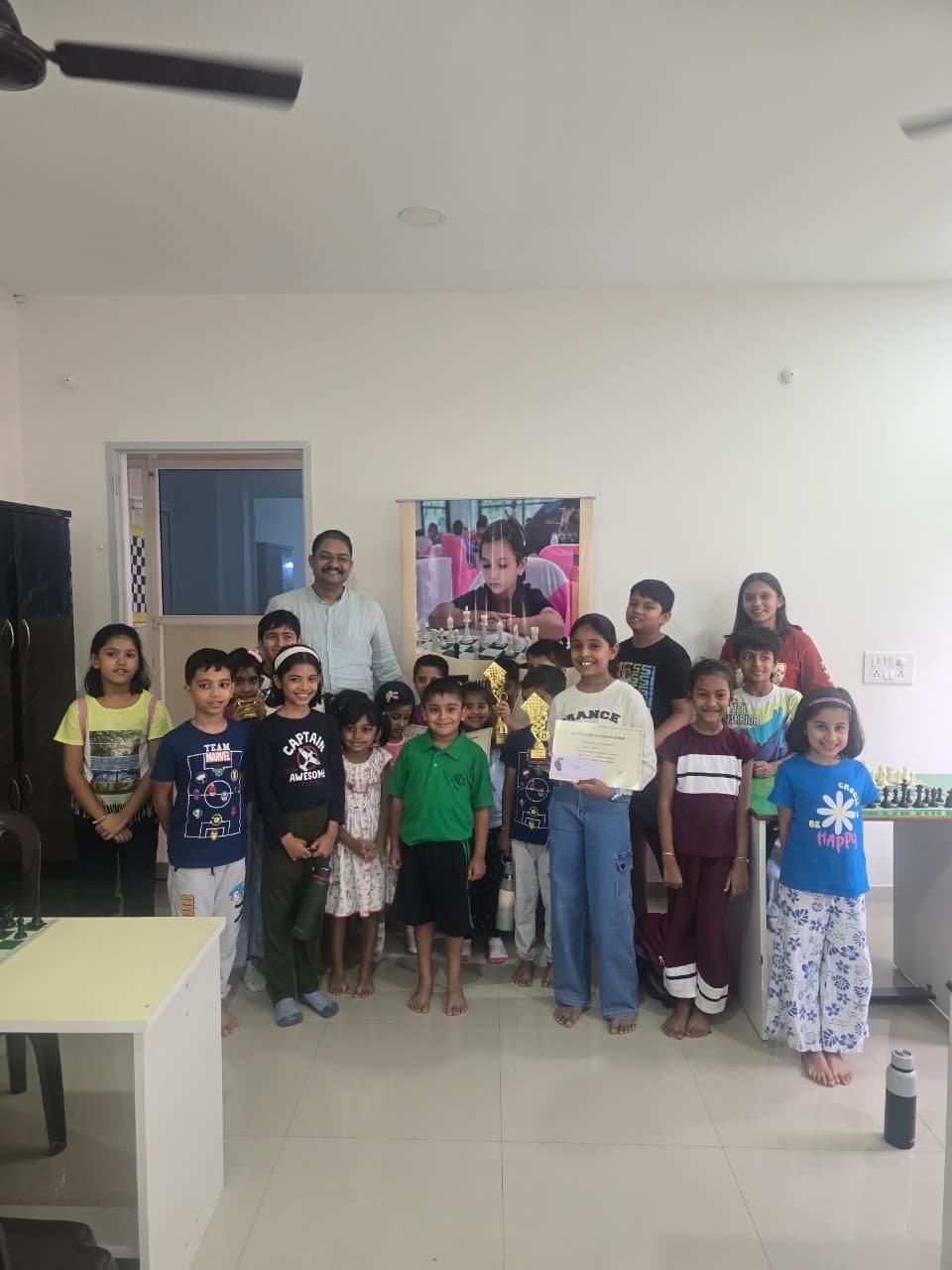
Welcome to White Knight Chess Academy (WKCA), located right here in the heart of Hadapsar, Pune! As parents living around Magarpatta, Amanora, Kharadi, and Keshav Nagar know very well, chess is one of the best activities for building sharp focus, patience, and academic problem-solving skills in growing children.
However, watching your child play their first few rated tournaments or friendly neighborhood matches can sometimes feel like a rollercoaster ride. One minute they are smiling brightly, and the next, they are staring in disbelief at a captured queen because of a simple oversight.
As the senior coach at WKCA—proudly recognized as 6-time Pune District Champions with over 1,500+ successful students trained by our team of FIDE-rated coaches—I have seen virtually every blunder a young player can possibly make.
The good news? Every grandmaster started as a beginner who hung their pieces.
In this comprehensive guide, we are going to explore the 5 common chess mistakes beginners make and share actionable beginner chess tips for kids that we use inside our training halls every single day to accelerate how to improve chess for beginners.
---
Mistake 1: Moving Pawns Randomly Without Piece Development
One of the most frequent traps young players fall into is pushing every single pawn on the board during the opening moves. They march their a-pawn, h-pawn, and f-pawn forward two squares, completely forgetting about their powerful knights and bishops.
Why Kids Do It
Pawns look approachable, and kids naturally want to secure space on the board right away. They treat the opening phase like a race to see who can push their soldiers forward the fastest.
The Problem
Pawns cannot move backward, meaning early over-extensions create permanent structural weaknesses. Furthermore, leaving your knights and bishops trapped on their starting squares means you are playing with an army where only the foot soldiers have entered the battlefield.
How WKCA Coaches Fix It
During our structured chess training Pune sessions, we teach students the golden rules of the opening. We emphasize developing minor pieces knights before bishops toward the center before pushing extra flank pawns.
We use interactive board demonstrations where students quickly realize that a coordinated army of knights and bishops is ten times stronger than a lone wave of disorganized pawns.
---
Mistake 2: Hanging Pieces (Giving Away Free Material)
"Hanging a piece" is chess terminology for leaving a knight, bishop, rook, or queen undefended so that your opponent can capture it for absolutely nothing in return.
Why Kids Do It
Tunnel vision is the biggest culprit here. A child gets so focused on their own attacking plan—like trying to checkmate the enemy king from across the board—that they completely stop paying attention to what the opponent's last move actually threatened.
The Problem
Chess is an uncompromising game of arithmetic and spatial control. If you hand your opponent a free rook or queen early in the game, mounting a successful comeback becomes statistically improbable against any decent player.
How WKCA Coaches Fix It
We train our students to perform a mandatory mental checklist before making any move on the board. We call this the "OPP" rule: Observe Your Opponent's Previous move.
By constantly asking, *"What did my opponent just threaten, and are all my pieces safe?"* kids transition from impulsive movers to thoughtful tactical thinkers.
---
Mistake 3: Ignoring King Safety and Neglecting Castling
Beginners often leave their king sitting comfortably right in the middle of the board for 10 to 15 moves, treating it like a spectator watching a cricket match rather than the primary target of the game.
Why Kids Do It
Castling feels counterintuitive to young children at first because it involves moving two pieces in a single turn, and it often looks like the king is running away from the center of the action.
The Problem
When the king stays in the center, it is wide open to brutal central attacks, direct queen checks, and rapid checkmates—like the infamous 4-move Scholar's Mate.
How WKCA Coaches Fix It
We drill the habit of "Safety First" into every student who walks through our doors in Hadapsar. We teach them that castling is not cowardice; it is smart military strategy.
Our coaches reward kids during practice games when they castle within the first 7 to 10 moves. This single adjustment drastically drops their early-game loss rates.
---
Mistake 4: Playing Too Fast Without Calculation
Many young chess enthusiasts love the adrenaline rush of blitz chess, slamming their pieces down on the board with lightning speed without looking at the bigger picture.
Why Kids Do It
Children live in a fast-paced digital world of instant gratification and quick video games. They want the excitement of capturing pieces immediately without enduring the mental effort required for deep calculation.
The Problem
Speed chess without foundational discipline leads to careless blunders. Kids miss simple tactical forks, pins, and discovered attacks simply because they spent 2 seconds looking at a position that required 30 seconds of careful thought.
How WKCA Coaches Fix It
We implement strict hands-on calculation exercises during our academy classes. We teach students the art of visualization—asking them to calculate 2 to 3 moves ahead in their heads before touching any piece on the physical board.
When playing practice games, our coaches actively monitor time management, teaching kids to respect the clock and use it as a tool for accuracy rather than a rush to the finish line.
---
Mistake 5: Failing to Review Games and Learn from Losses
When a beginner loses a match in a local tournament or classroom game, their immediate reaction is often frustration, sadness, or a desire to instantly start a new game without analyzing what went wrong.
Why Kids Do It
Losing hurts, and young minds naturally want to escape negative emotions by sweeping the defeat under the rug and moving on to the next distraction.
The Problem
Albert Einstein famously said that anyone who has never made a mistake has never tried anything new. If a child never analyzes their losses, they are doomed to repeat the exact same tactical blunders over and over again.
How WKCA Coaches Fix It
At WKCA, we foster a positive, growth-oriented academy culture where losses are celebrated as the greatest teachers.
Our FIDE-rated coaches sit down with students after major tournaments held across Pune to conduct post-game analysis. We break down the turning points of the game, helping kids discover alternative winning moves themselves.
This post-mortem review process builds emotional resilience and fast-tracks analytical improvement.
---
Frequently Asked Questions About Beginner Chess Training
Q: At what age can my child start formal chess training at WKCA?
A: Children can start learning the fundamentals of chess as early as 5 years old. Our beginner batches are specifically tailored to make learning fun, engaging, and age-appropriate through interactive storytelling and puzzle games.
Q: How long does it take for a beginner kid to see visible improvement in their game?
A: With consistent weekly coaching, supervised practice, and home puzzle solving, most kids show dramatic improvements in tactical awareness, concentration, and match confidence within 3 to 6 months.
Q: Do you offer tournament preparation for kids living in Hadapsar and surrounding areas?
A: Yes! As 6-time Pune District Champions, we specialize in professional tournament training. We prepare students for District, State, and National level FIDE-rated events, guiding them through competitive psychology and time management.
Q: How can I book a trial class at White Knight Chess Academy?
A: Booking a trial session is very easy. Simply visit our official website at wkca64.com or drop by our Hadapsar training center to meet our expert coaches and experience our structured curriculum firsthand.
---
Give Your Child the Winning Edge at WKCA
Correcting these five common chess mistakes requires patience, expert mentorship, and a structured curriculum designed to build both tactical sharpness and emotional maturity.
Whether you live in Hadapsar, Magarpatta, Amanora, Kharadi, or Keshav Nagar, White Knight Chess Academy provides the ideal environment for your child to unlock their true cognitive potential.
Ready to transform your child's chess game from amateur blunders to calculated brilliance?
Visit [wkca64.com](https://wkca64.com) today to schedule your child's trial class with our expert FIDE-rated coaches and take the first step toward chess mastery!
Book a Free Trial Chess Class
Want structured, FIDE-rated coaching for your child in Hadapsar, Pune or online? Join a free trial session at White Knight Chess Academy.
Book Free Trial Class